4C Hair Care for Beginners: Where to Start
4C Hair Care for Beginners: Where to Start
If you’re new to caring for 4C hair, it can feel like there is a lot to learn. The good news is that 4C hair care for beginners doesn’t have to be complicated.
There are products to understand, wash-day routines to figure out, different styling methods to consider, and an endless stream of hair advice online.
But you don’t need to know everything before you can start taking good care of your hair.
You also don’t need a bathroom full of products.
A good beginner routine starts with a few consistent habits: cleanse, condition, detangle gently, manage moisture, and protect your hair from unnecessary damage.
Afro-textured hair has characteristics that influence how it behaves and how it responds to styling and handling, but individual hair and scalp needs still vary. A 2026 review of Afro-textured hair care emphasizes that it is a spectrum rather than a single uniform hair type. PubMed
So instead of trying to copy someone else’s exact routine, use the basics as your starting point and adjust based on how your own hair responds.
What is 4C hair?
4C is a commonly used hair-typing label for very tightly coiled hair.
The coils can range from relatively small and defined to less visibly defined, and shrinkage can make the hair appear considerably shorter than its stretched length.
But here’s something important for beginners:
Your 4C hair does not have to behave exactly like someone else’s 4C hair.
Two people can both identify their hair as 4C while having different:
- Hair density
- Strand thickness
- Length
- Scalp needs
- Styling habits
- Chemical or heat history
- Moisture preferences
- Tolerance for manipulation
That’s why hair typing can be useful for general conversation, but it shouldn’t become a rulebook.
The goal isn’t to make your hair behave like somebody else’s.
The goal is to understand your hair well enough to care for it consistently.
Table of Contents
The 5 Basics of 4C Hair Care for Beginners
If you’re overwhelmed by all the advice you’ve seen online, start here.
Think of your routine as five repeatable habits:
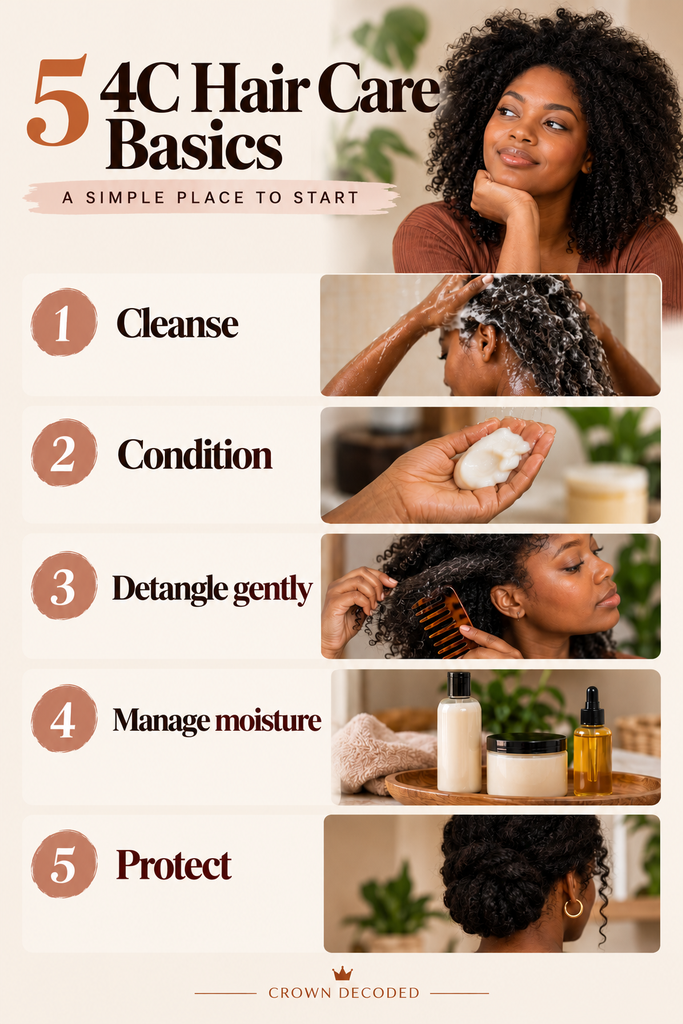
That’s also the basic framework behind the Crown Decoded 4C Hair Routine Guide.
You can build on these steps later. You don’t need to master everything at once.
1. Cleanse your scalp and hair
Washing your hair isn’t something you need to avoid simply because you have 4C hair.
Your scalp still needs to be cleansed, and your washing routine can help remove accumulated products, oil, sweat and other buildup.
The trick is finding a washing routine that works for your scalp and hair.
The American Academy of Dermatology recommends that people with dry, textured, curly or thick hair shampoo when needed, and advises applying shampoo primarily to the scalp rather than aggressively working it through the entire length of the hair. AAD
For a beginner, that means you don’t need to obsess over finding the “perfect” number of days between washes.
Pay attention to your scalp.
If you’re dealing with noticeable buildup, flakes, excessive oiliness or discomfort, your routine may need adjusting.
And if your scalp is comfortable and your hair is manageable, you don’t necessarily need to change your entire routine because someone online follows a different wash schedule.
Start here:
- Choose a cleanser that works for your hair and scalp.
- Focus shampoo on the scalp.
- Rinse thoroughly.
- Avoid aggressive scrubbing through the lengths.
- Follow with conditioner.
Your washing routine doesn’t have to be complicated.
2. Condition every time you wash
Conditioner is one of the most useful basics for a beginner because it can make your hair easier to manage.
The AAD recommends using conditioner after washing and notes that conditioner can moisturize, detangle and improve manageability. AAD
For textured hair, this matters because the easier your hair is to handle, the less tempting it is to force a comb or brush through difficult sections.
You may eventually use different types of conditioners for different purposes:
- Rinse-out conditioner for your regular wash
- Deep conditioner when you want a more intensive conditioning step
- Leave-in conditioner when your hair benefits from additional manageability between washes
But you don’t need to buy all three immediately.
Start with a conditioner that works for you and learn how your hair responds.
A leave-in conditioner can also be useful for some people with curly, dry, brittle, tangled or difficult-to-manage hair. AAD
The goal isn’t to accumulate products.
It’s to give each product you use a clear job.
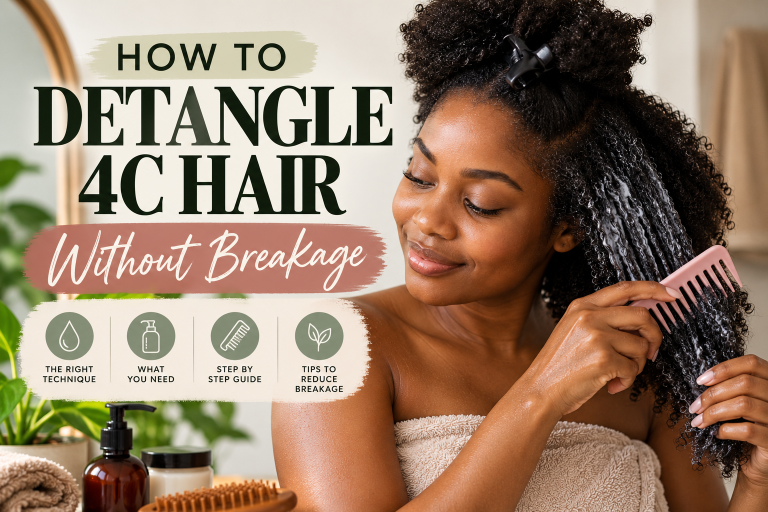
3. Detangle gently
Detangling is one of the moments when technique matters most.
Instead of trying to pull through your entire head at once, divide your hair into manageable sections.
Add enough conditioner or another product that gives your hair the slip you need, then work through the section gradually.
For tightly curled or textured hair, the AAD recommends detangling while the hair is wet or damp and advises starting at the ends before gradually working upward. AAD
That means you don’t need to attack a knot from the roots and hope for the best.
Try:
- Separate your hair into sections.
- Add conditioner or detangling product.
- Use your fingers to loosen stubborn tangles when helpful.
- Start at the ends.
- Gradually work upward.
- Slow down when you meet resistance.
If a section is difficult, add more slip and take your time rather than repeatedly forcing a comb through it.
For a more detailed walkthrough, read our guide on how to detangle 4C hair without breakage.
The Crown Decoded approach is simple: less pulling, more control.
4. Learn what your hair actually needs for moisture
“Moisturize your hair” is probably some of the most common advice you’ll see in natural-hair spaces.
But that doesn’t mean you need to spray, cream, oil and layer products onto your hair every single day.
There isn’t one universal amount of moisture that every head of 4C hair needs.
Instead, pay attention to how your hair feels and behaves.
Ask yourself:
- Does my hair feel unusually dry?
- Is it difficult to manipulate?
- Does it feel comfortable after my normal routine?
- Am I adding product because my hair needs it or simply because I think I’m supposed to?
- Am I repeatedly layering products without knowing what they do?
More product doesn’t automatically equal more moisture.
A simple routine with a few products that each have a purpose is often easier to understand and troubleshoot than a routine with ten overlapping products.
And if your hair feels fine, you don’t necessarily need to add another layer simply because it’s a certain day of the week.
Let your hair give you information.
5. Be gentle with styling and manipulation
Your styling choices are part of your hair-care routine too.
A hairstyle can look beautiful while still creating too much tension or requiring more manipulation than your hair can comfortably tolerate.
The AAD warns that repeatedly wearing tight braids, cornrows, ponytails or extensions can create tension that contributes to breakage and, over time, hair loss. AAD
And pain isn’t something you should simply accept as part of getting your hair done.
The AAD specifically advises that braids, cornrows and weaves shouldn’t be too tight and says that if a style hurts while it’s being installed, the stylist should stop and redo it. AAD
So when choosing a style, ask:
Can I wear this comfortably?
Will I need to constantly manipulate my hair to maintain it?
Does the style put noticeable tension on my edges or scalp?
Will removing it require aggressive detangling?
This is also why the phrase “protective style” shouldn’t automatically mean “healthy style.”
A style is only protective if the way it’s installed, worn and removed isn’t repeatedly creating unnecessary stress.
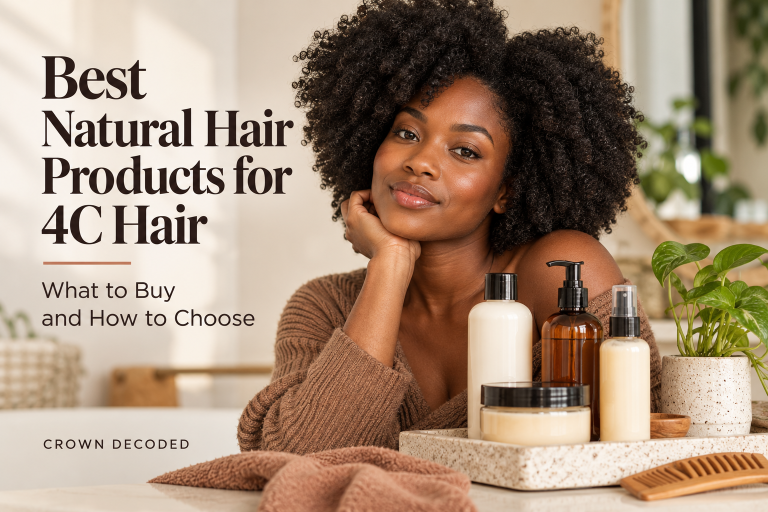
What products does a beginner actually need?
This is where things can get unnecessarily complicated.
You don’t need to buy every product recommended by a natural-hair influencer before you can start your routine.
A beginner can start with a small system.
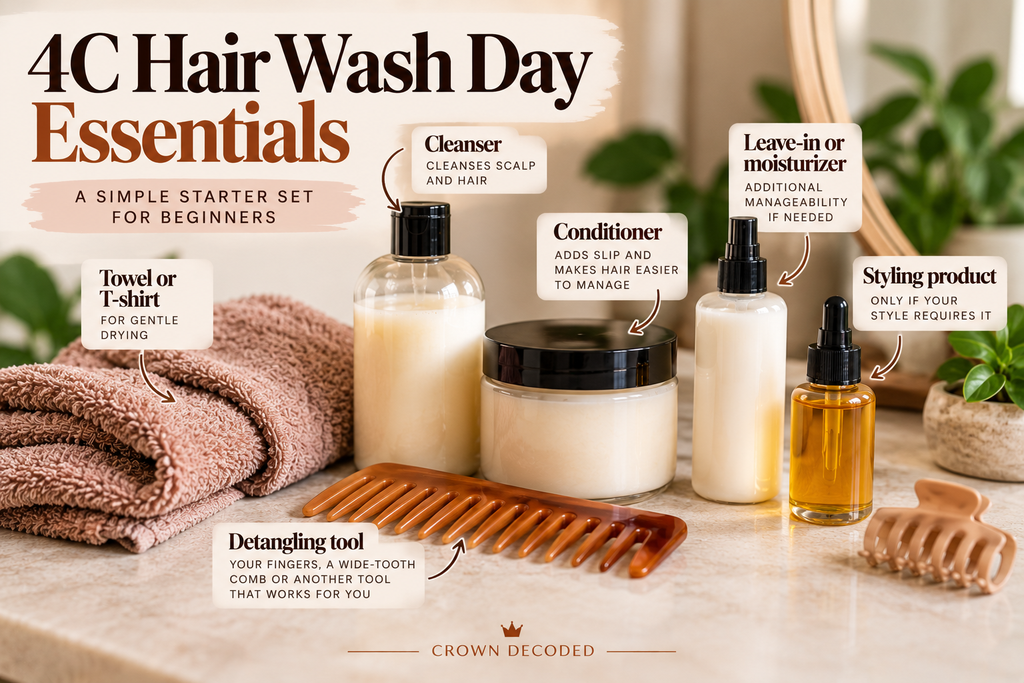
1. A cleanser
For cleansing your scalp and hair.
2. A conditioner
For conditioning and improving manageability.
3. A leave-in or moisturizer
If your hair benefits from one between washes.
4. A styling product
Only if your chosen hairstyle requires one.
5. A detangling tool
This might be your fingers, a wide-tooth comb, or another tool that works well with your hair and technique.
That’s enough to begin.
As you learn more about your hair, you can decide whether additional products actually solve a problem.
Don’t build your routine around the number of products you own. Build it around what each product does.
A simple beginner wash-day routine
If you’re wondering what all of this looks like in practice, here’s a straightforward starting point.
Before you start
Gather the products and tools you’ll need.
If your hair is difficult to manage in one large section, divide it into smaller sections.
This can make washing and detangling more controlled.
Step 1: Cleanse
Focus your cleanser on the scalp and rinse thoroughly.
Avoid turning washing into a vigorous scrubbing session.
Step 2: Condition
Apply your conditioner and give it enough time to provide the slip and manageability you need.
Step 3: Detangle
Work section by section.
Start at the ends and gradually move upward.
If you hit a stubborn knot, slow down rather than forcing the tool through it.
Step 4: Finish
Once your hair is clean and detangled, use your leave-in or moisturizer if it works for your routine.
Then choose a manageable style.
Step 5: Leave it alone
One of the easiest ways to complicate your routine is to keep manipulating your hair after you’ve already finished.
If your hair is comfortable and styled, you don’t need to keep doing something to it.
How do you know if your 4C hair routine is working?
You don’t need to measure your routine by how many products you’ve purchased or how many steps you complete.
Look for practical signs.
Your routine may be working well if:
- Your scalp feels comfortable.
- Your hair is reasonably manageable.
- You can detangle without excessive pulling.
- Your styles don’t repeatedly cause pain or excessive tension.
- You understand what your main products are for.
- You’re not constantly changing your entire routine.
- You’re noticing patterns in dryness, tangling or breakage.
These are also the kinds of questions included in the Crown Decoded Routine Guide’s routine check.
And if something isn’t working?
Change one or two things at a time.
If you change your cleanser, conditioner, moisturizer, styling routine and detangling method all in the same week, it becomes much harder to figure out what actually helped.
4C hair-care mistakes beginners often make
Buying too many products
A large product collection doesn’t automatically make a better routine.
Start with the basics and learn what each product does.
Changing your routine constantly
Give yourself enough time to understand what is and isn’t working.
You don’t need to restart every time you see a new hair-care trend.
Treating every sign of dryness with more product
Sometimes the answer isn’t another layer of product.
Look at your cleansing, conditioning, styling and handling habits too.
Detangling aggressively
Knots are frustrating, but rushing through them can make the process harder on your hair.
Work in sections and slow down.
Keeping tight styles because they’re supposed to be protective
If a style consistently causes pain or noticeable tension, it’s worth reconsidering.
Using too much heat
Excessive heat can damage hair regardless of hair type. The AAD recommends limiting heat styling and using lower temperatures and heat protection when heat is used. AAD
Assuming everyone with 4C hair needs the same routine
This might be the biggest beginner mistake of all.
Your hair has its own history, density, length, styling habits and needs.
Use other people’s routines as ideas—not instructions.
What about hair growth?
It’s easy to enter natural-hair care with the goal of “growing your hair.”
But try not to let growth become the only measure of whether your routine is successful.
A better starting point is creating habits that help you retain the hair you have and minimize avoidable damage.
Gentle handling, appropriate cleansing and conditioning, and avoiding excessive tension and heat are more useful foundations than chasing a miracle growth product.
And if you’re experiencing sudden or noticeable thinning or hair loss, that’s different from ordinary hair-care troubleshooting.
The AAD recommends seeing a board-certified dermatologist when you notice changes in hair health or noticeable thinning so the underlying cause can be evaluated. AAD
Your beginner 4C hair-care checklist
Save this as your starting point:
Your Crown Decoded Beginner Check
☐ I have a basic cleansing routine.
☐ I condition when I wash.
☐ I know how to detangle my hair gently.
☐ I pay attention to how my hair feels instead of automatically adding more product.
☐ I understand what my main products are supposed to do.
☐ I avoid styles that repeatedly cause pain or excessive tension.
☐ I limit unnecessary manipulation.
☐ I protect my hair from excessive heat.
☐ I change one thing at a time when troubleshooting my routine.
☐ I’m building a routine I can actually maintain.
You don’t have to check every box today.
That’s the point of starting with the basics.
The bottom line
Caring for 4C hair doesn’t have to begin with a complicated routine.
Start with the fundamentals:
Cleanse. Condition. Detangle gently. Manage moisture based on what your hair needs. Protect your hair from unnecessary tension, manipulation and heat.
Then pay attention.
What makes your hair easier to manage? What causes unnecessary tangling? When does your scalp feel uncomfortable? Which products actually have a useful job?
Those observations will tell you much more about your routine than copying someone else’s product shelf.
And remember: your hair doesn’t need to behave like anyone else’s.
The best routine is one you understand, can maintain, and can adjust when your hair or lifestyle changes.
Related Crown Decoded guides
If you’re ready to go one step deeper:
Editorial note / sources
This article draws on current guidance from the American Academy of Dermatology and the 2026 peer-reviewed narrative review of Afro-textured hair care. The recommendations above are educational and are not a substitute for individualized medical advice. PubMed
Recommended external references for publication: AAD guidance on Black hair and everyday hair care; Humphrey et al., Afro-textured hair care: a narrative review and recommendations for dermatologists (2026).