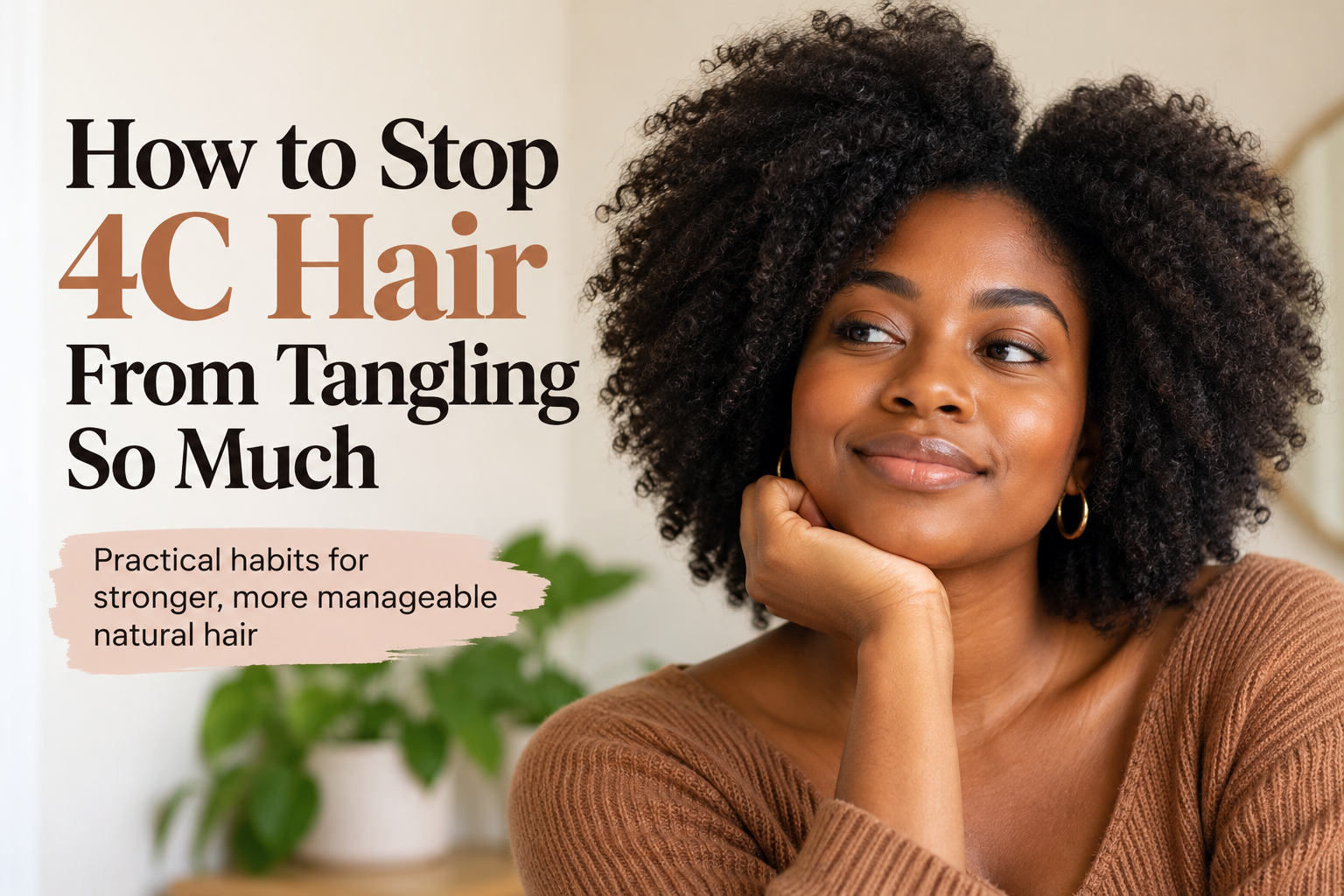
How to Stop 4C Hair From Tangling So Much
If you’ve been wondering how to stop 4C hair from tangling so much, a few changes to your everyday routine may help make your hair easier to manage.
The answer isn’t necessarily another product or a more complicated routine. Sometimes, small changes to how you section, wash, style and protect your hair can make it easier to manage.
Because 4C hair has a tightly coiled structure, strands can wrap around and catch on one another. Shed hairs can also become trapped among surrounding strands. Some tangling is normal, but recurring knots, excessive pulling and rough handling deserve attention.
In this guide, you’ll learn why 4C hair tangles so easily, which habits may help reduce recurring tangles, and how to make your hair-care routine more manageable.
Table of Contents
Why Does 4C Hair Tangle So Easily, and How to Stop 4C Hair From Tangling?
Understanding what contributes to tangling can help you choose a routine that addresses the problem instead of repeatedly treating the symptoms.
Tightly coiled strands can interlock
Tightly coiled hair can curl back on itself, allowing individual strands to catch on neighboring hairs. Research examining African hair under a microscope has documented interlocking hair shafts and knots. This helps explain why tangling can be a recurring part of caring for tightly coiled hair.
It doesn’t mean everyone with 4C hair will experience the same amount of tangling. Hair length, individual strand characteristics, styling choices and handling habits can all influence how manageable your hair feels.
The goal isn’t to eliminate every knot. It’s to reduce avoidable tangles and handle the ones that occur without unnecessary pulling.
Shed hairs can become caught in your hair
Hair naturally sheds as part of its growth cycle. When a strand sheds, it may remain caught among surrounding coils rather than falling away immediately.
These loose strands can become intertwined with other hairs, particularly when sections are allowed to mix together. Gentle handling and keeping your hair in manageable sections can help make it easier to deal with shed hairs during your normal routine.
Dryness, friction and damaged ends can make tangling harder to manage
Several factors may contribute to recurring tangles:
- Dryness: Hair that feels rough or difficult to manage may benefit from appropriate conditioning.
- Friction: Repeated rubbing against clothing, bedding or other surfaces can disturb your hairstyle and contribute to mechanical stress.
- Damaged ends: Split or worn ends may catch on neighboring strands, making knots more difficult to work through.
- Rough handling: Pulling, rushing through knots or repeatedly combing the same section can increase stress on the hair.
- Unmanaged sections: Allowing long sections of hair to mix together during washing or styling can make tangles harder to control.
These factors don’t affect everyone in the same way. If your hair keeps tangling, look at when and where the problem happens before changing your entire routine.
7 Habits That Can Help Prevent 4C Hair From Tangling
You don’t need to adopt seven new habits overnight. Start with the changes most relevant to your hair, then pay attention to whether they make a difference.
1. Keep your hair in manageable sections
Sectioning is one of the simplest ways to make natural hair easier to handle.
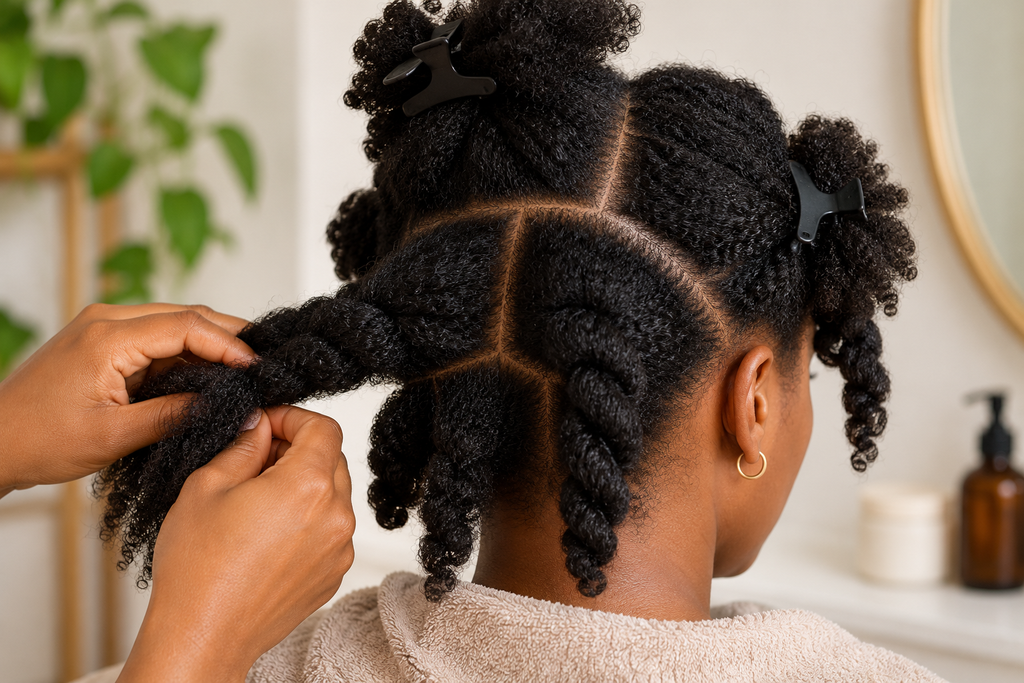
When you work with your entire head of hair at once, strands can mix together, especially during washing and conditioning. Smaller sections help you keep track of which areas you’ve handled and which still need attention.
Try this:
- Divide your hair into a few manageable sections before washing.
- Work through one section at a time.
- Keep completed sections separated with loose twists, braids or suitable clips.
- Avoid pulling sections tightly against your scalp.
- If a section becomes difficult to manage, make it smaller rather than rushing through it.
The number of sections isn’t important. Choose an arrangement that lets you handle your hair comfortably without making wash day unnecessarily long.
2. Use conditioner to improve slip and manageability
Conditioner can help make curly and coily hair easier to manage and detangle. Dermatologists recommend conditioning textured hair and using gentle detangling methods to reduce unnecessary damage.
The aim isn’t to coat your hair in as much product as possible. It’s to use a suitable conditioner that helps you work through your hair with less resistance.
During wash day:
- Apply your conditioner according to the product instructions.
- Distribute it through the section you’re working on.
- Give the product the recommended time to work.
- Gently address tangles rather than forcing a comb through them.
- Rinse as directed.
If your hair is difficult to manage between wash days, a suitable leave-in conditioner may also help. You don’t necessarily need multiple leave-ins, oils and creams layered together.
For the full technique, read our guide to how to detangle 4C hair without breakage.
3. Choose styles that help keep strands organized
Your hairstyle can influence how much your hair tangles during the day.
Loose hair gives your coils more freedom to move and interact with one another. Twists, braids and other manageable styles can keep sections more organized, which may make day-to-day handling easier.
Consider styles that:
- Keep your hair manageable for your usual activities.
- Don’t require frequent combing or restyling.
- Allow you to access your scalp and cleanse your hair appropriately.
- Feel comfortable rather than tight or painful.
- Can be maintained without repeatedly pulling at your strands.
You don’t have to wear your hair in twists or braids all the time. If you enjoy wearing your hair loose, you can still manage tangling through gentle handling, nighttime care and an appropriate wash-day routine.
The best style is one that works for your hair, lifestyle and comfort.
For more guidance on choosing suitable styles, explore our article on protective hairstyles for 4C hair.
4. Pay attention to friction and how you wear your hair
Your hair moves throughout the day. Depending on your style and activities, it may rub against clothing, bedding, scarves or other surfaces.
Repeated friction can disturb loose styles and contribute to mechanical stress. You don’t need to avoid all contact or keep your hair tucked away constantly, but you can make a few practical adjustments.
For example:
- Consider a style that keeps your ends organized when wearing high-friction clothing.
- If your hair is loose, check whether the ends repeatedly catch on collars or accessories.
- Avoid repeatedly pulling your fingers or a comb through your hair simply to reshape it.
- If a style becomes tangled or difficult to manage, adjust it gently rather than pulling it apart.
Pay attention to patterns. If your hair repeatedly tangles in one area, consider whether your styling or daily activities are contributing.
5. Protect your hair while sleeping
Your nighttime routine can help preserve your hairstyle and reduce friction against your bedding.
The American Academy of Dermatology recommends loose hairstyles and describes satin or silk bonnets and pillowcases as options for reducing friction and helping preserve curls.

Depending on how you wear your hair, you could:
- Put your hair into a few loose twists or braids before bed.
- Use a comfortable satin or silk bonnet or scarf.
- Try a satin or silk pillowcase if head coverings aren’t comfortable for you.
- Avoid tying your hair so tightly that your scalp feels sore.
- Check that your nighttime style doesn’t create tension at your edges or roots.
You don’t need to use every option. Choose one that fits your sleeping habits and helps keep your hair manageable in the morning.
6. Handle your hair gently between wash days
Once you’ve detangled and styled your hair, you may not need to comb through it every day.
Repeatedly manipulating your hair can create additional opportunities for pulling, friction and breakage. Instead of restyling your entire head whenever your hair looks a little different, assess what it actually needs.
Between wash days:
- Refresh your hair when necessary rather than automatically adding products.
- If a section becomes tangled, work on that section instead of combing through your entire head.
- Use suitable conditioning products when needed to improve manageability.
- Avoid pulling apart stubborn knots.
- Keep your routine simple enough to maintain consistently.
If your hair feels dry or difficult to handle, consider whether your moisture routine needs adjustment. More product isn’t always the answer.
Our guide to keeping 4C hair moisturized between wash days explains how to refresh your hair based on what it needs.
You can also revisit our guide to building a 4C hair care routine that actually works if you need help putting your habits together into a manageable routine.
7. Pay attention to recurring knots at the ends
If your hair repeatedly tangles at the ends, take a closer look at what’s happening there.
The ends are the oldest part of your hair and have been exposed to handling, styling and environmental wear for longer than newly grown hair. Damaged or split ends may contribute to difficult tangling, although not every knot indicates damage.
Notice whether:
- Knots keep forming in the same areas.
- The ends feel rough or catch on neighboring strands.
- You see visible splitting or fraying.
- Detangling repeatedly causes snapping or excessive breakage.
- A particular style or handling method seems to make the problem worse.
Try adjusting how you handle the affected section first. If the ends are visibly damaged and consistently difficult to manage, a trim may be worth considering.
You don’t need to trim your hair on a rigid schedule simply because you have 4C hair. Base the decision on its condition, your preferences and your hair goals.
How to Prevent 4C Hair From Tangling on Wash Day
Wash day can be one of the easiest times for hair to become tangled if sections are allowed to mix together or the process becomes rushed.
A simple, organized approach can make handling easier.
Before you start
- Gather your shampoo, conditioner and other products.
- Divide your hair into manageable sections.
- Have clips or other suitable accessories ready to keep sections separated.
- Give yourself enough time to handle your hair without rushing.
While washing
- Follow your usual cleansing routine and concentrate shampoo on your scalp.
- Handle the lengths gently instead of scrubbing them together.
- Keep sections organized as you work.
- Apply conditioner as directed and use the opportunity to address tangles gently.
- Avoid forcing your fingers or a comb through resistant knots.
After washing
- Rinse products according to their instructions.
- Gently absorb excess water without rough towel rubbing.
- Apply leave-in or styling products if your routine calls for them.
- Keep sections separated while styling.
- Choose a manageable style if you don’t plan to wear your hair loose.
These steps complement, rather than replace, your regular wash-day and detangling techniques.
For a complete walkthrough, read our guide to how to wash 4C hair. If you need help with knots that remain after washing, our article on detangling 4C hair without breakage covers the process in more detail.
What to Do If Your 4C Hair Keeps Tangling in the Same Places
When tangling keeps returning, the location can offer a useful clue about what to investigate. It doesn’t establish a cause on its own, but it gives you a place to start.
Tangles at the roots
If your roots become tangled or matted, consider how you’re separating and handling your hair during washing and styling.
Try working with smaller sections and checking that the roots are being handled gently. Avoid repeatedly pulling a comb through a tangled area.
If the hair becomes severely matted or you cannot separate it without substantial pulling, consider getting help from an experienced natural-hair professional.
Knots at the ends
Knots concentrated at the ends may be related to tightly coiled strands catching on one another, shed hairs or damaged ends.
Focus on gentle handling, appropriate conditioning and manageable styles. If you repeatedly encounter the same knots, inspect the ends rather than assuming that adding more moisturizer will solve the problem.
Hair that tangles again immediately after washing
Review how you’re handling your hair throughout the wash process.
Are sections mixing together while you shampoo? Are you rubbing the lengths against each other? Are you rushing through the conditioning stage? Are you allowing completed sections to become tangled with unfinished ones?
You may not need to change your products at all. Adjusting how you handle the hair may be a more useful first step.
Tangles accompanied by unusual breakage or hair loss
Some shedding is normal, and some tangling is part of caring for tightly coiled hair. However, persistent or severe tangling accompanied by significant breakage, noticeable thinning, scalp pain or other scalp symptoms deserves more attention.
Consider speaking with a qualified dermatologist if the problem continues despite gentler care or if you notice concerning changes. A professional can assess whether a scalp or hair condition may be contributing.
A Simple 4C Hair Tangling-Prevention Checklist
You can use this checklist during your next few wash days to identify which habits help your hair stay manageable.
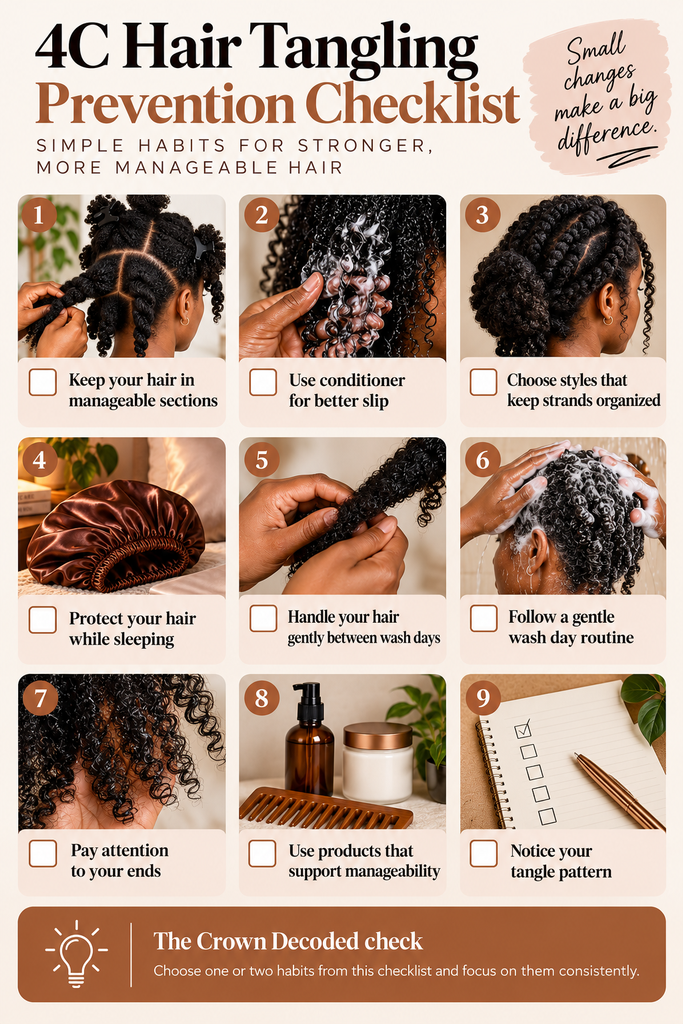
- I divide my hair into manageable sections when needed.
- I use a suitable conditioner to help make handling easier.
- I handle tangles gently instead of pulling through them.
- I choose styles that suit my lifestyle and don’t create excessive tension.
- I protect my hair at night in a way that feels comfortable.
- I avoid unnecessary combing and repeated restyling.
- I pay attention to recurring knots at the ends.
- I notice when and where tangles occur so I can adjust my routine.
- I change one or two habits at a time instead of replacing every product at once.
The Crown Decoded check: Find your recurring tangle pattern
Before changing your routine, ask yourself three questions.
Where does my hair tangle most? At the roots, along the lengths or at the ends?
When does it happen? During washing, overnight, after styling or between wash days?
What changes when I handle it differently? Does smaller sectioning, gentler handling or a different nighttime style make it easier to manage?
Use your answers to make one practical adjustment at a time. This makes it easier to identify which changes actually help.
Frequently Asked Questions About 4C Hair Tangling
Is it normal for 4C hair to tangle every day?
Some tangling is normal for tightly coiled hair because strands can catch on one another. The amount varies from person to person. If tangles are becoming difficult to manage or are accompanied by excessive breakage, review your handling and styling habits.
Does 4C hair need to be in twists or braids to prevent tangles?
No. Twists and braids can help keep sections organized, but they aren’t mandatory. You can wear your hair loose if you prefer. Focus on gentle handling, manageable styling and a nighttime routine that suits you.
Why does my 4C hair tangle after washing?
Hair can become tangled when sections mix together during cleansing, rinsing or drying. Try working in manageable sections, handling the lengths gently and keeping completed sections separate throughout the process.
Does dry 4C hair always mean it needs more moisturizer?
Not necessarily. Hair that feels rough or difficult to manage may benefit from conditioning, but tangling can have several contributing factors. Consider handling, styling, friction and the condition of your ends before automatically adding more products.
Can single-strand knots be prevented completely?
There is no established routine that guarantees complete prevention. Because tightly coiled strands can catch on themselves, some knots may still occur. Gentle handling and manageable styling can help reduce avoidable tangling, but the goal is not perfection.
The Bottom Line
If your 4C hair keeps tangling, you don’t necessarily need a completely new routine. Start by looking at how you handle your hair, whether you keep sections manageable, how you protect it at night and whether recurring knots are concentrated in particular areas.
Use conditioner to improve manageability, choose comfortable styles and avoid unnecessary pulling or repeated restyling. If the same problem keeps returning, change one or two habits and observe the results before adding more products.
At Crown Decoded, the goal isn’t to make your hair behave like anyone else’s. It’s to help you understand your hair, care for it gently and build a routine you can realistically maintain.