How to Build a 4C Hair Care Routine That Actually Works
Caring for 4C hair can feel unnecessarily complicated.
One person says you should wash every week. Someone else says washing too often will dry out your hair. Then there are leave-ins, oils, deep conditioners, protein treatments, protective styles, detangling methods—and suddenly your “simple routine” has 14 steps.
It doesn’t have to be that complicated.
A good 4C hair care routine is really about a few consistent practices: keeping your scalp and hair clean, conditioning regularly, handling the hair gently, maintaining moisture and reducing unnecessary manipulation.
The details can change depending on your hair, scalp, lifestyle and the styles you wear. What matters most is building a routine that keeps your hair manageable and your scalp comfortable without creating unnecessary stress.
Table of Contents
What does a 4C hair care routine actually need?
Want the simple version?
At its simplest, a routine needs five things:
Cleansing to remove sweat, oil, dead skin and product buildup.
Conditioning to improve manageability and make detangling easier.
Moisture management to help your hair remain flexible and easier to handle.
Gentle handling to reduce unnecessary mechanical damage.
Protection to limit excessive manipulation, heat and tension.
Afro-textured hair has structural characteristics that can make it more prone to tangling and breakage, while everyday grooming and styling practices can also affect hair health. Current dermatology literature emphasizes that both the hair’s natural characteristics and how it is handled matter.
The goal isn’t to create a perfect routine. It’s to create one you can actually maintain.
How often should you wash 4C hair?
This is probably one of the most confusing questions in natural hair care.
There isn’t a single number that every person with 4C hair needs to follow.
The American Academy of Dermatology recommends washing curly or coily hair when needed and notes that dry, textured hair may not need frequent shampooing, with a minimum of every two to three weeks as needed for scalp and hair health. A 2026 review of Afro-textured hair care, meanwhile, discusses evidence supporting regular gentle cleansing, including weekly washing, to help manage the scalp environment and product buildup.
The important takeaway isn’t to pick one number and stick to it forever.
Think about:
- how much you sweat or exercise;
- how much product you use;
- whether you wear your hair loose or in a longer-term style;
- how your scalp feels between washes; and
- whether you’re experiencing visible buildup, itching or flaking.
Your wash schedule should be something you adjust based on your hair and scalp, rather than a rule you follow because someone online said it’s mandatory.
A simple 4C hair care routine
Here’s the basic framework I’d start with.
1. Cleanse your scalp
Shampoo is primarily there to clean your scalp.

Rather than aggressively scrubbing the entire length of your hair, concentrate the shampoo on the scalp and let the lather and rinse water clean the rest. The American Academy of Dermatology specifically recommends applying shampoo to the scalp rather than the full length of the hair to help avoid unnecessary drying.
If you’ve been using a lot of gels, oils, creams or pomades, you may occasionally need a clarifying cleanser to remove buildup. How often you need one depends on your routine.
The goal is a clean scalp without turning wash day into a battle with your hair.
2. Condition your hair
Conditioner is one of the most useful parts of a 4C routine.
It helps make the hair easier to manage and can make detangling less difficult. For dry or curly hair, the AAD recommends applying conditioner along the length rather than only to the ends.
This is also the stage where you can give yourself a little more slip before detangling.
Your conditioner doesn’t have to be the most expensive product on the shelf. What matters is whether it makes your hair easier for you to handle.
3. Detangle gently
Detangling is where a lot of unnecessary mechanical stress can happen.
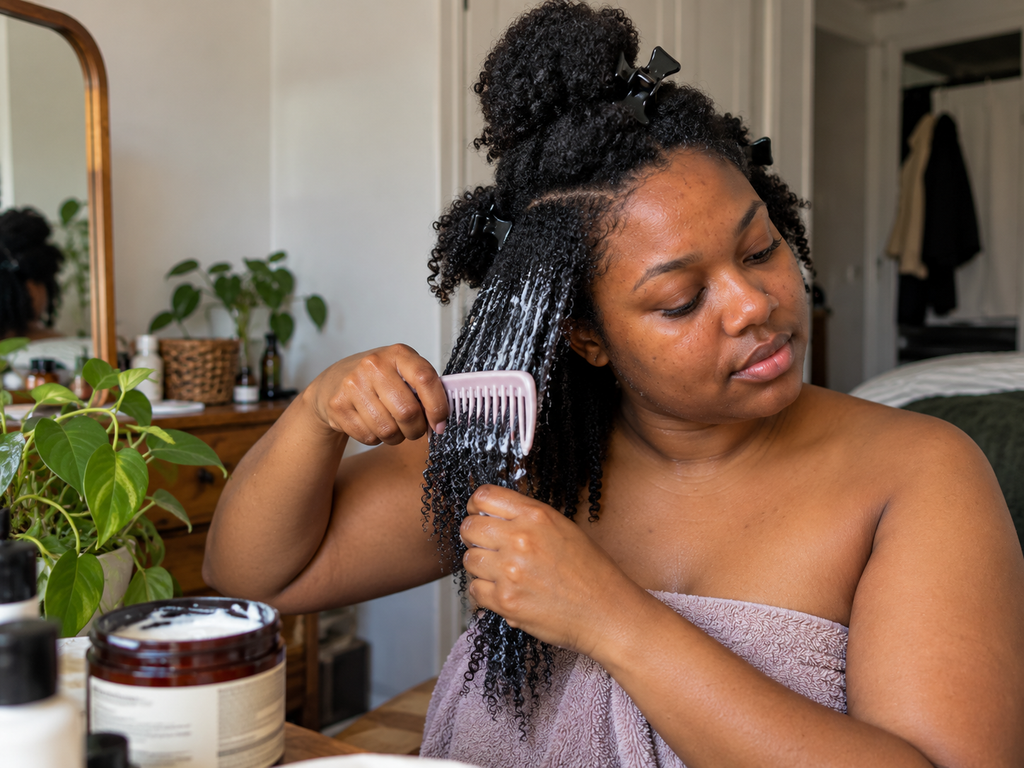
For thick, curly hair, the AAD recommends detangling wet hair, ideally while conditioner is still providing slip, and starting at the ends before gradually working upward.
Instead of attacking your whole head at once, divide it into manageable sections.
And don’t feel like you need to use the most aggressive brush possible to get every knot out. Slow, controlled detangling is often easier on the hair than repeatedly pulling through resistance.
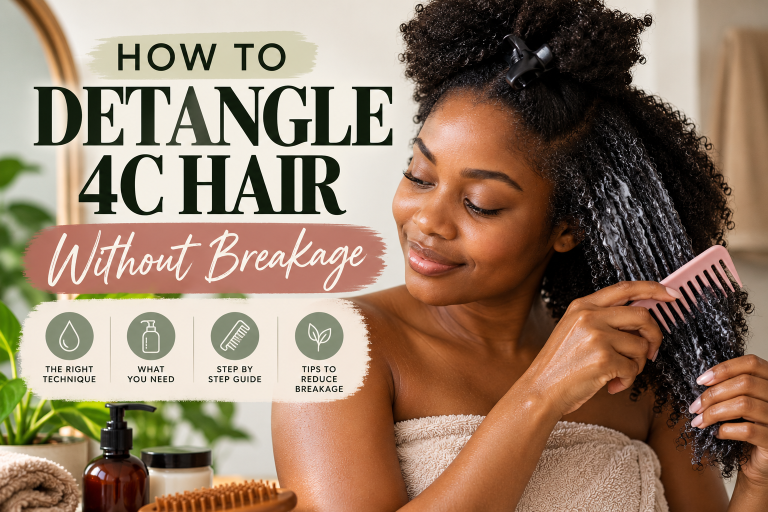
If detangling is one of the trickiest parts of your routine, our guide on how to detangle 4C hair without breakage walks through a gentler step-by-step approach.
4. Moisturize based on what your hair needs
“Moisturizing” doesn’t necessarily mean applying another layer of oil every time your hair feels dry.
Conditioning, water, leave-in products and other products can all play different roles in how manageable and moisturized your hair feels.
The AAD notes that curly/coily hair tends to be drier and recommends conditioning the hair thoroughly; it also discusses leave-in conditioners as an option for improving manageability.
Rather than copying a particular method because it’s trending, pay attention to the result:
Does your hair feel softer?
Is it easier to detangle?
Does it remain manageable for a reasonable amount of time?
Those are more useful questions than whether you’ve followed a particular acronym perfectly.
5. Choose a style that doesn’t create unnecessary stress
Once your hair is clean and conditioned, choose how you want to wear it.
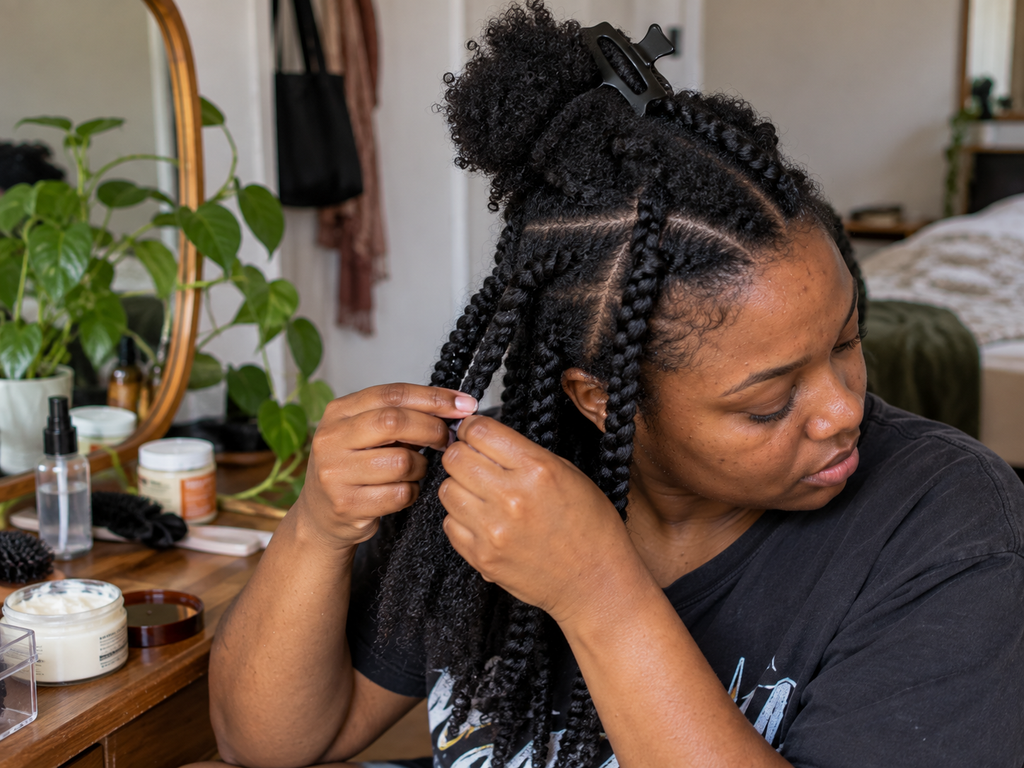
That might be:
- a twist-out;
- an afro or puff;
- flat twists;
- braids;
- another low-manipulation style; or
- simply wearing your hair loose.
Protective styling can reduce manipulation and make hair easier to manage, but “protective” doesn’t automatically mean “risk-free.”
Tight braids, cornrows, ponytails, extensions and other styles that repeatedly place tension on the scalp can contribute to hair and scalp problems. The AAD specifically advises avoiding styles that pull tightly on the hair and recommends changing styles when they cause pain or irritation.
A hairstyle shouldn’t have to hurt to be protective.
How to keep 4C hair moisturized between wash days
You don’t necessarily need to completely redo your routine every few days.
Between wash days, focus on maintenance rather than constant manipulation.
That might mean:
keeping your hair in a low-manipulation style, protecting it while you sleep, refreshing it only when necessary, and avoiding unnecessary combing or restyling.
A silk or satin scarf, bonnet or pillowcase can also reduce friction during sleep; recent dermatology literature on Afro-textured hair care discusses nighttime protection as part of hair maintenance.
The key is to avoid turning “refresh day” into another full wash day.
How to reduce breakage
Breakage isn’t simply something you should blame on having 4C hair.
Hair structure plays a role, but how you handle your hair matters too.
Repeated pulling, aggressive detangling, excessive heat and tight hairstyles can all contribute to damage. The 2026 review of Afro-textured hair care specifically highlights everyday styling and grooming practices as important factors in hair health.
Start by looking at your own routine.
Ask yourself:
Am I detangling aggressively?
Am I constantly restyling my hair?
Are my hairstyles tight around my edges or scalp?
How often am I using high heat?
Does my hair feel rough and difficult to manage after certain products or techniques?
Sometimes the best change isn’t adding another product. It’s removing a damaging habit.
Where products fit into your routine
Products are tools—not the routine itself.
A simple routine might include a cleanser, conditioner, leave-in or moisturizer and a styling product.
You may need more or fewer products depending on your hair and the styles you wear.
And don’t assume that because a product is marketed specifically for “4C hair,” it automatically belongs in your routine.
Look at what the product is designed to do.
A cleanser cleans.
A conditioner improves conditioning and manageability.
A leave-in can provide additional conditioning and help with detangling.
A styling product helps create or hold a hairstyle.
An oil may serve a different purpose depending on how you use it and the formulation involved.
The 2026 review emphasizes that product choice should be considered alongside the individual’s hair properties and any mechanical or chemical stress their hair has experienced.
That’s why Crown Decoded won’t tell you that you need ten products simply because they’re popular.
Signs your routine may need a rethink
Sometimes your hair is giving you feedback.
If it constantly feels dry, look at your cleansing and conditioning routine and how you’re maintaining moisture between washes.
If detangling regularly results in significant breakage, look at your technique, how much slip you’re working with and how often you’re manipulating the hair.
If your hair feels heavy or coated, consider whether you’re accumulating too much product.
If your scalp is persistently itchy, painful, flaky or irritated, don’t automatically assume it’s simply “dry scalp.” Persistent scalp problems may need evaluation by a dermatologist or other qualified healthcare professional.
Your routine should make your hair easier to care for—not create a new problem to solve every week.
The Crown Decoded Routine Check
Before adding another product or completely changing your routine, ask yourself five questions:
Is my scalp clean and comfortable?
Is my hair manageable after conditioning?
Am I detangling gently?
Am I minimizing unnecessary manipulation and tension?
Is my routine actually addressing the problem I’m trying to solve?
If the answer to most of these is yes, you may not need a more complicated routine.
You may just need consistency.
Bottom line
A good 4C hair care routine doesn’t have to be complicated.
Start with the basics: cleanse, condition, detangle gently, maintain moisture, and protect your hair from unnecessary manipulation, heat and tension.
Then pay attention to how your hair and scalp respond.
Your routine doesn’t have to look like someone else’s to work.
Less guesswork. More understanding.
A practical guide to building a simple 4C hair care routine, from cleansing and conditioning to moisture, detangling and protective styling.